Winning 2048 is mostly about control. The runs that fall apart usually do so for the same reasons: tiles spread across the board, the largest number slips out of position, and there is no room left when a useful merge finally appears. A simple structure solves most of that.
On Game 2048, the basic approach is the same whether you are aiming for 2048 or trying to push past it: keep the board organized, limit unnecessary swipes, and build around one stable direction. It is not flashy, but it is what separates short runs from consistent progress.
The core rule: keep your largest tile in one corner
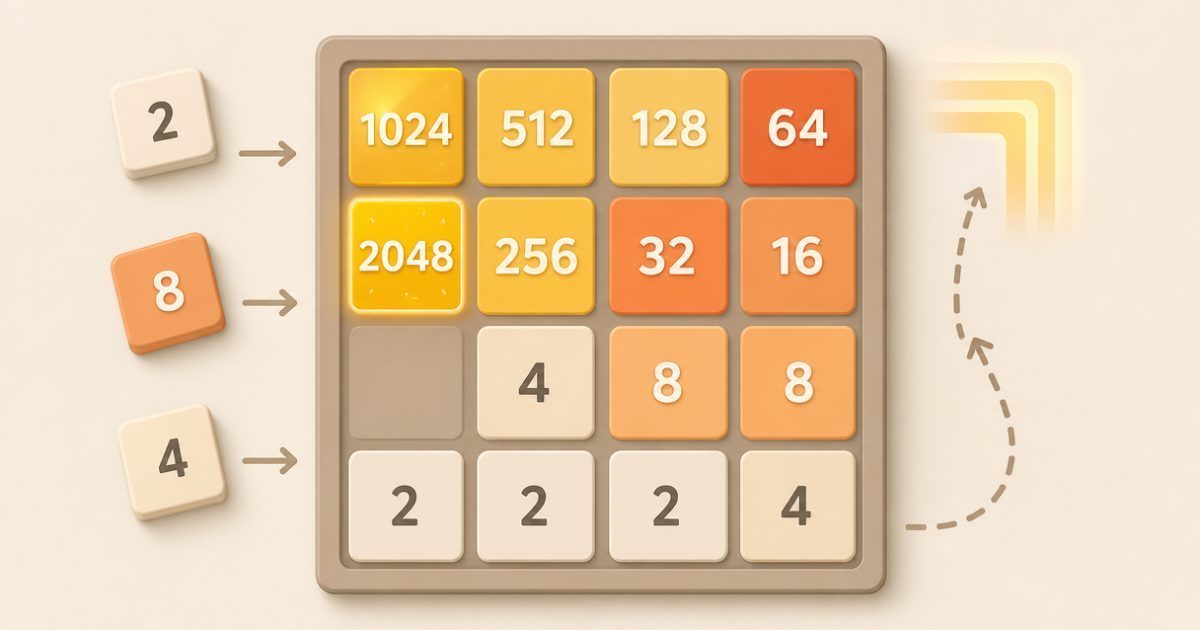
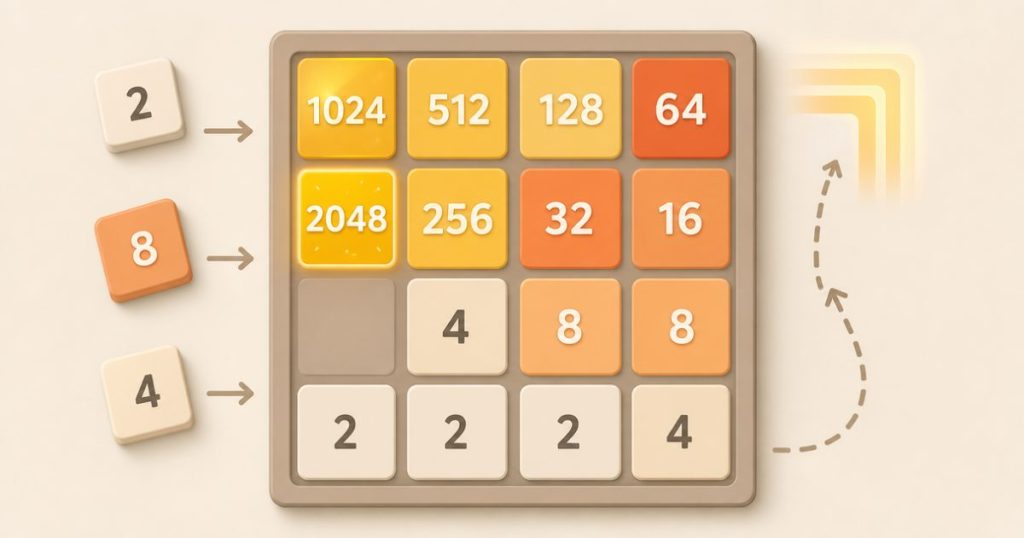
Pick a corner and treat it as home base for your biggest tile. Most beginners use the bottom-left or bottom-right corner because it is easier to keep the row and column next to it clean.
The important part is consistency. Your largest tile should not keep drifting around the board. Once that happens, the rest of your structure usually starts to break with it.
Use only two directions most of the time
A strong beginner pattern is to favor two moves that support your corner and avoid the opposite directions unless you really need them. For example, if your largest tile sits in the bottom-left corner, you will often rely on left and down.
This keeps the board stacked in a predictable way. The moment you start swiping in all four directions, tiles separate, gaps open in awkward places, and control disappears faster than most new players expect.
Make space before the board feels full
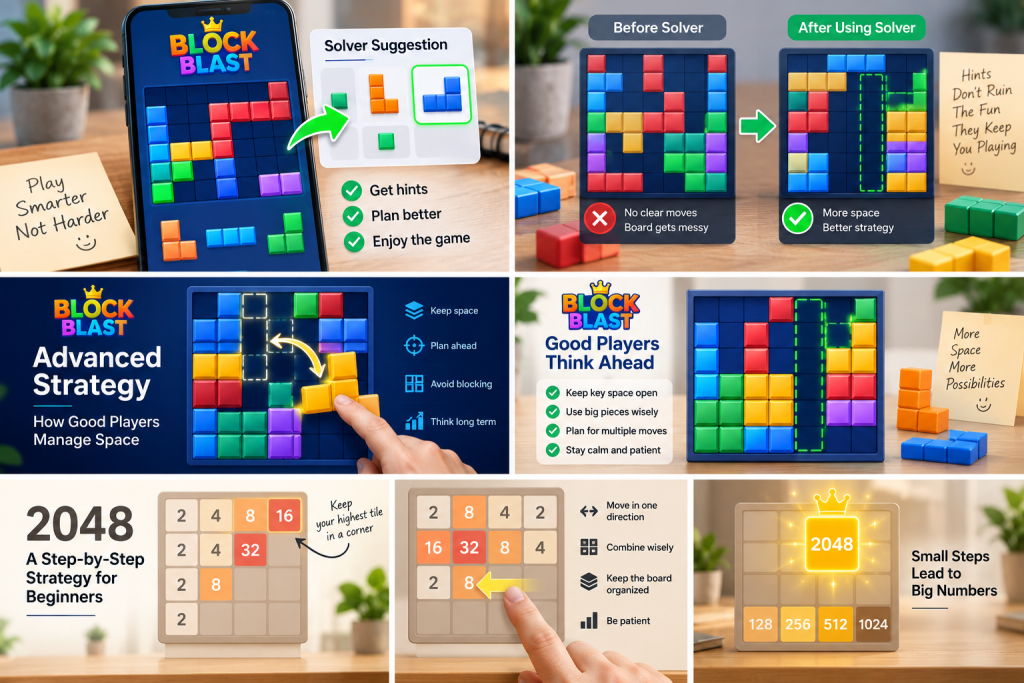
Do not wait until the board is almost blocked. A solid 2048 game usually keeps a few open cells ready for unexpected 2s and 4s. If the board starts tightening up, slow down and look for a move that creates breathing room without breaking your structure.
What to avoid
- Moving your biggest tile out of the corner
- Breaking a clean row just to make one easy merge
- Using random swipes when you feel stuck
- Ignoring small gaps that will matter in the next few turns
Think one merge ahead, not one move ahead
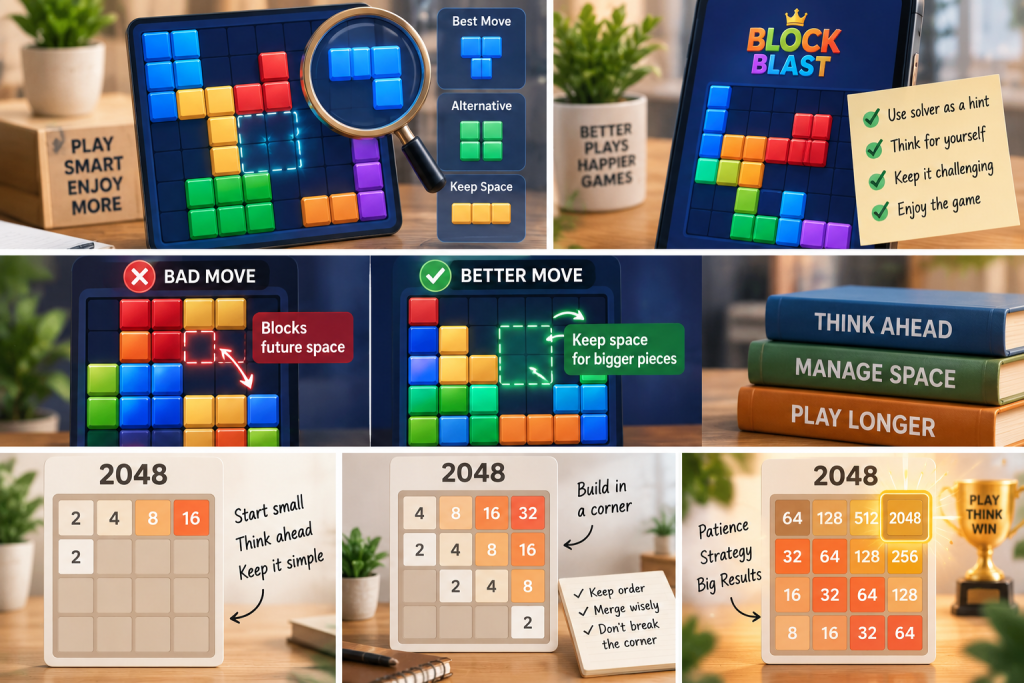
Ask what the board will look like after the next two or three moves, not just after the current swipe. If a move gives you one merge but ruins your ordering, it is usually the wrong move.
The best beginner runs are not the most dramatic ones. They are steady, organized, and a little boring in the best way. That kind of play makes 1024 and 2048 much more reachable.
If you want to compare this approach with a different board layout, the board-size guide on 2048 board sizes is a useful follow-up.
If you want a real chance of winning 2048, start with structure instead of speed. Keep your largest tile anchored, use a limited set of moves, and protect empty space so the board can absorb new tiles without collapsing.
Once that becomes natural, many games that once felt like bad luck start to look more manageable. The difference is usually not one perfect swipe, but a few cleaner decisions made before the board gets crowded.