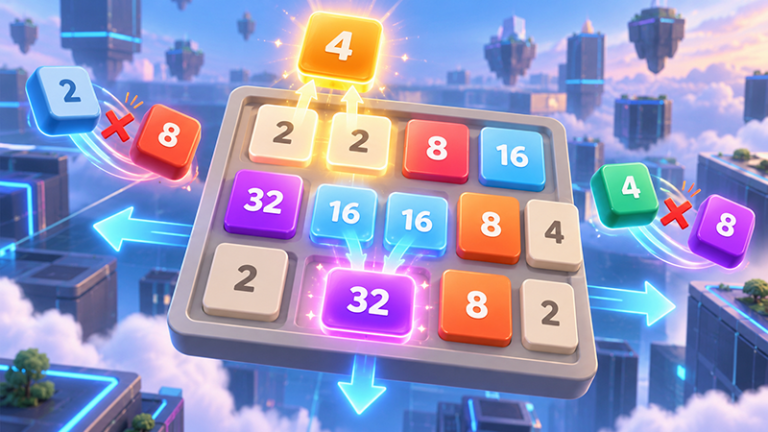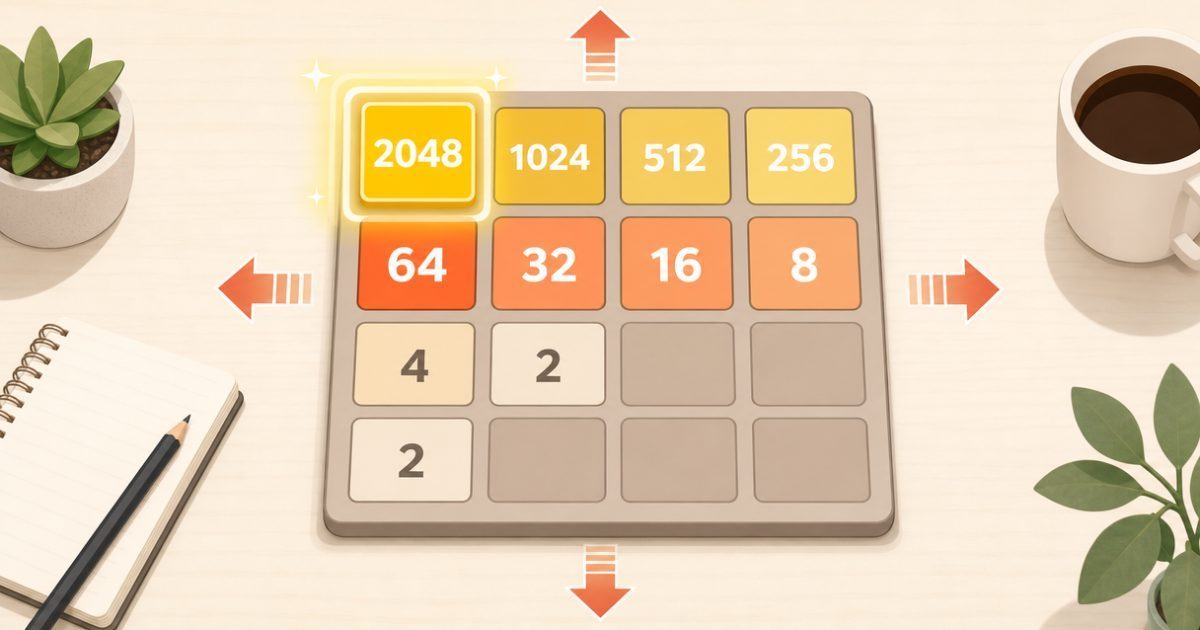
The simplest way to get better at 2048 is not to chase every merge. Give the board a shape, keep that shape stable, and use each swipe to protect your position. For beginners, that usually means anchoring your highest tile in one corner, building smaller tiles around it in order, and avoiding moves that scatter the board.
Once you stop treating every swipe as a reaction, the game becomes easier to read. You will still depend on tile spawns, but a clear structure gives you more safe moves, more empty space, and a better chance of reaching higher tiles.
The beginner goal in 2048
2048 is a tile-merging puzzle. You swipe to move all tiles in one direction, and matching numbers combine into larger values. The game ends when the board is full and no legal merges remain.
For beginners, the goal is not just to score points. It is to keep the board organized long enough to build higher tiles without trapping yourself. A strong early game is built on control, not speed.
Choose one corner and protect it
Your first major decision is simple: pick one corner and make it your home base. Most beginners use a bottom corner or a top corner and keep the highest tile there for as long as possible.
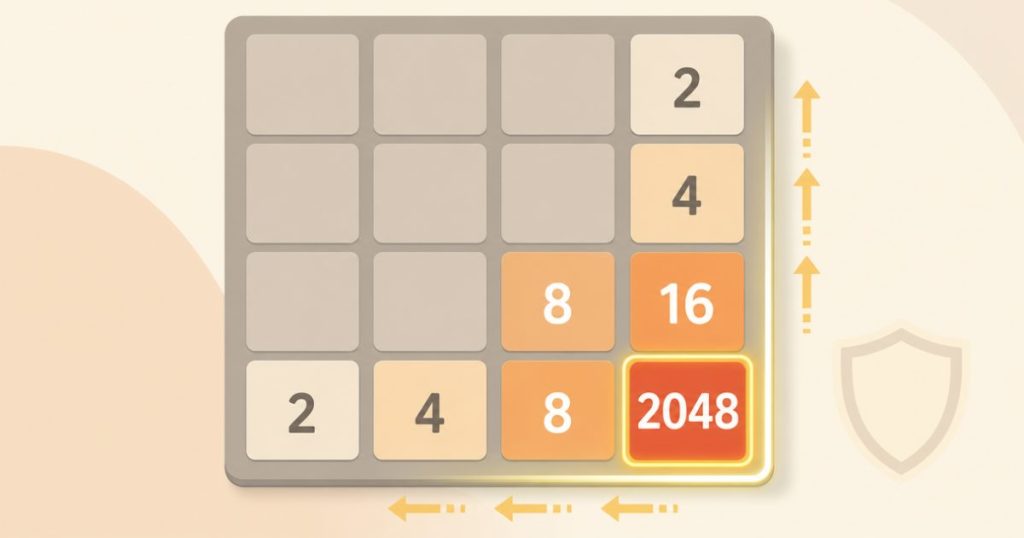
This works because corners are easier to defend than the middle of the board. If your largest tile drifts into the center, it becomes harder to manage and easier to block.
A simple example of corner control
Imagine your 128 tile is in the bottom-right corner. If you keep swiping right and down when the board allows it, the 128 stays anchored. New tiles build nearby, and the structure stays predictable.
If you suddenly swipe up for no reason, that 128 may move out of place. Now the board is less organized, and you spend extra turns fixing the layout instead of improving it.
Keep a consistent swipe pattern
Beginners often lose because they swipe in every direction just to grab merges. A better habit is to use a preferred pattern most of the time, such as holding the board with two main directions and using the other two only when necessary.
This consistency gives the board a rhythm. You know where large tiles want to live, and you can judge whether a move improves the shape of the board or only creates a temporary merge.
Build tiles in descending order
Try to keep your biggest tile next to slightly smaller tiles, then smaller ones after that. A clean descending line or column makes future merges easier.
For example, if your corner tile is 128, it helps when 64 and 32 sit nearby in a way that can naturally combine later. If tiles of the same size get spread across the board, you spend more turns chasing them and less time controlling space.
This is one reason experienced players care about order. A neat structure gives you more predictable merge paths.
Protect empty spaces like they matter
Empty cells are not just breathing room. They are your main safety net. The more open spaces you keep, the easier it is to recover from a bad spawn and the longer you can survive.
When the board gets crowded, every swipe matters more. One extra empty space can be the difference between a useful merge and a dead end.
If you want a practical rule, avoid moves that fill the board faster than they create useful structure. A small merge that keeps two or three spaces open is often better than a larger-looking move that clogs the grid.
Merge with purpose, not just because you can
One of the most common beginner mistakes is merging tiles the moment they appear. That feels productive, but it can break the layout you need for later moves.
Sometimes the better choice is to wait. If a merge would pull a useful tile out of your corner, break your row order, or reduce your open space, it may be smarter to hold off until the board shape improves.
When to delay a merge
Delay a merge when it would:
- move your highest tile away from the corner
- break a clean row or column
- reduce the number of empty spaces too quickly
- force you into an awkward upward move
Merge now when it helps preserve structure or prevents the board from locking up.
Avoid moving up too often
For many beginners, repeated upward swipes are what break the game. An upward move can pull high tiles away from the bottom, disrupt your corner control, and expose the board to messy tile placement.
That does not mean you should never move up. It means upward moves should be deliberate. If you use up as a default swipe, you will usually lose the structure that makes safe play possible.
A useful rule is to treat upward moves as recovery moves, not your main pattern.
How to tell whether a move is safe
Before you swipe, ask one quick question: will this move keep the board more organized, or will it only create a merge and make the layout worse?
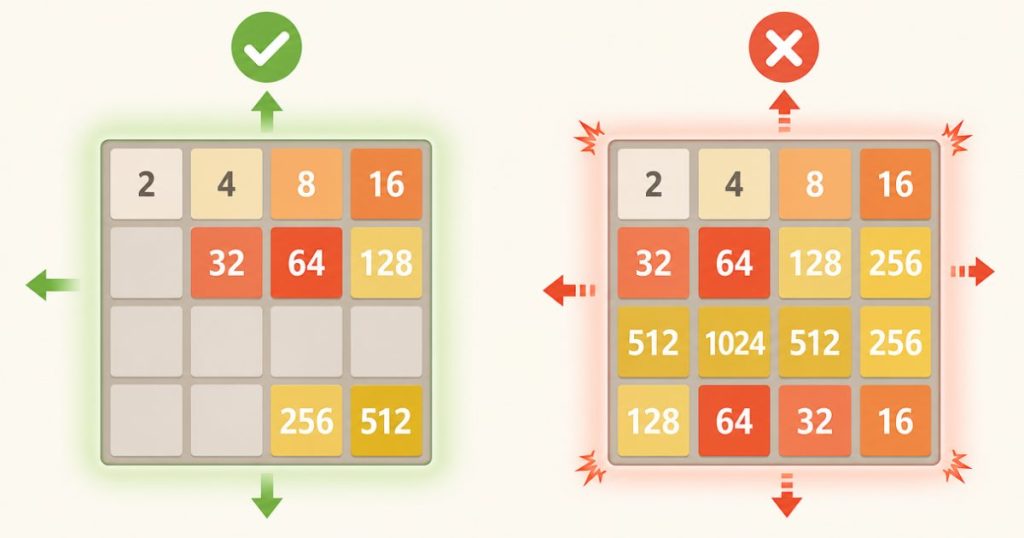
A safe move usually does at least one of these things:
- keeps the highest tile anchored in place
- preserves or increases empty spaces
- maintains descending order
- sets up a future merge without forcing a bad follow-up
If a move fixes one problem but creates two new ones, it is probably not safe.
Do not trap your highest tile
Your largest tile should feel protected, not boxed in. If smaller tiles get placed above it or on the wrong side of your corner, you can accidentally block the very tile you are trying to preserve.
That is how a board becomes messy fast. The corner stops working, the highest tile cannot move freely, and you are forced into cleanup mode.
Keep large tiles away from the center when you can. The middle of the board should be used for temporary movement, not for parking your main tile.
Think one or two moves ahead
You do not need advanced forecasting to improve. You just need to look past the immediate merge and ask what the next swipe will do.
For example, if a right swipe creates a 32 merge but leaves your 64 tile exposed, the short-term gain may not be worth it. A better move might create a safer board shape first and save the merge for the next turn.
This habit matters because 2048 is really about sequence, not isolated moves. Good swipes lead to more good swipes.
Use small merges to improve board shape
Not every merge is about points. Sometimes a merge is useful because it removes clutter, opens a lane, or restores order in a crowded area.
That said, the best small merges are the ones that support your structure. A random 4+4 merge that pulls tiles out of position can hurt more than it helps. A smaller merge that frees a column or reconnects your descending line is much more valuable.
If you want a score-first mindset, read how to get a higher score in 2048 without ruining your board after this guide.
Recover calmly when the board gets messy
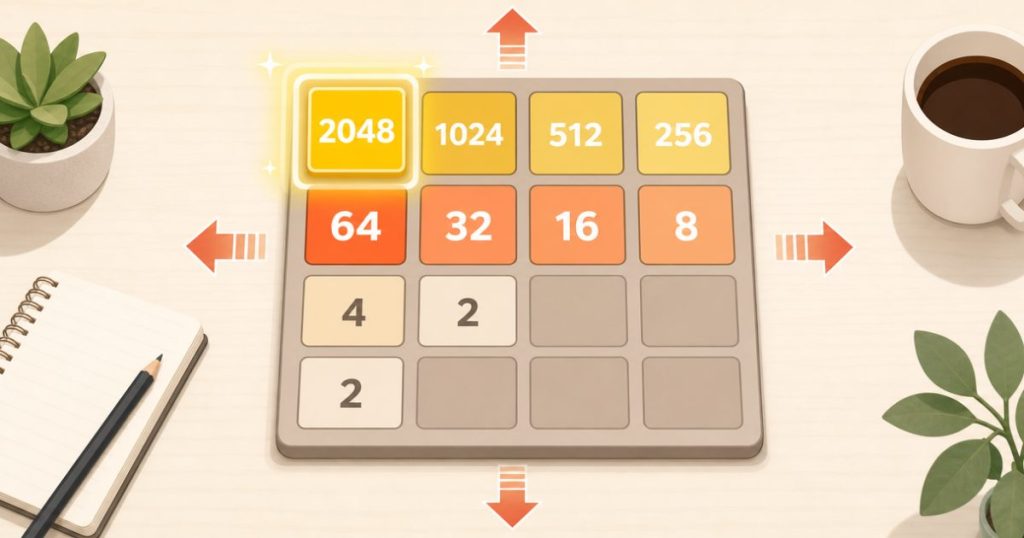
Every beginner eventually reaches a point where the layout starts to slip. That does not automatically mean the game is over. The key is to stop forcing aggressive merges and look for the move that restores space.
When the board is messy, play for survival first. Choose the move that preserves the most empty cells and keeps your largest tile from drifting. You may need one or two turns to rebuild structure before you can return to your usual pattern.
A good recovery move is often the one that looks boring but buys you time.
Keep score in perspective
Score matters, but it should not be your only guide. In 2048, a board that stays organized will usually lead to a better score over time than a board that chases every possible merge.
Beginners often think a bigger immediate merge is always the right move. In practice, a safe merge that preserves structure can lead to a much better run. If you want a fuller explanation of that tradeoff, see is 2048 luck or skill?.
A quick beginner checklist before each swipe
- Is my highest tile still anchored in my chosen corner?
- Will this move keep a clean order around that tile?
- Am I preserving empty spaces?
- Is this merge helping the board, not just the score?
- Am I using up only when I need to recover structure?
- Do I know what my next move would be if this swipe works?
If you can answer those questions quickly, you are already playing more deliberately than most beginners.
Common beginner mistakes to avoid
The biggest early mistakes are easy to spot. Beginners swipe in every direction, move the largest tile out of the corner, merge too early, and fill the board faster than they can control it. Those habits make the game feel random.
Another common problem is treating every turn as urgent. You do not need to take the first merge you see. You need the merge that keeps the board playable.
Once you start protecting one corner, preserving space, and thinking one move ahead, 2048 becomes much easier to manage.
Frequently Asked Questions
What is the easiest strategy for beginners in 2048?
Keep your highest tile in one corner, build around it in order, and avoid random swipes. That gives you more control and more empty spaces.
Should I always merge tiles as soon as I can?
No. Merge when it improves the board shape or prevents trouble. If a merge breaks your structure, it can be better to wait.
Why do experienced players avoid moving up too often?
Upward moves can pull the highest tile out of position and break the corner setup that keeps the board organized.
How do I know if a move is safe?
A safe move keeps your highest tile protected, preserves empty spaces, and improves or maintains the board’s order.
If you remember only one beginner rule, make it this: protect one corner and let the rest of the board support it. That single habit makes your moves easier to read and helps you avoid the messy patterns that end most runs.
From there, focus on preserving empty spaces, delaying bad merges, and using upward moves only when they help you recover control. Those small choices matter more than chasing every tile on the board.