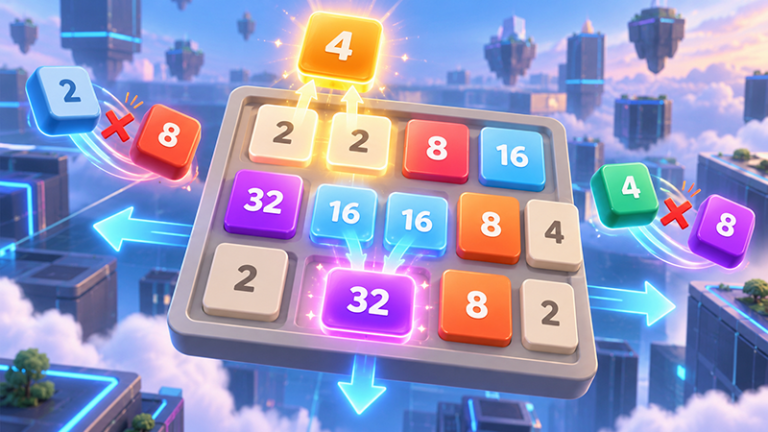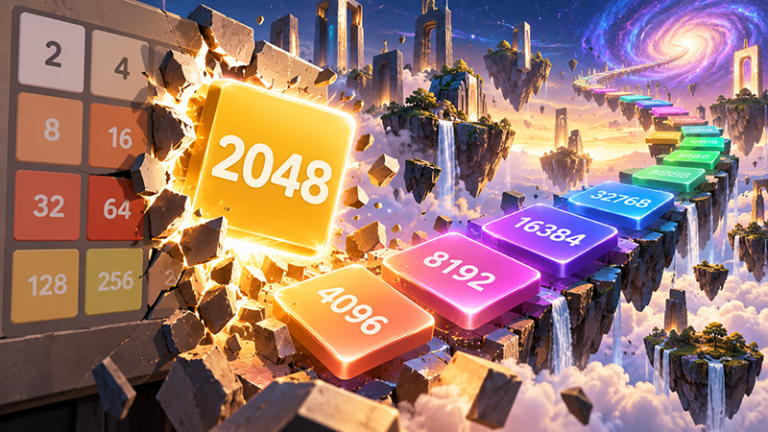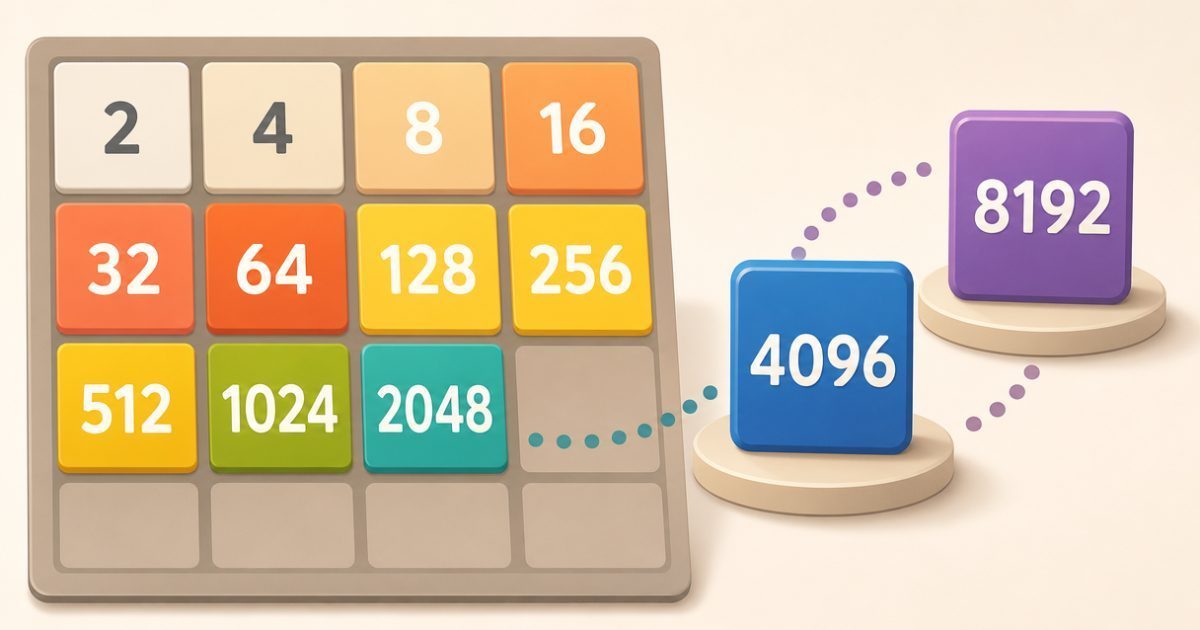
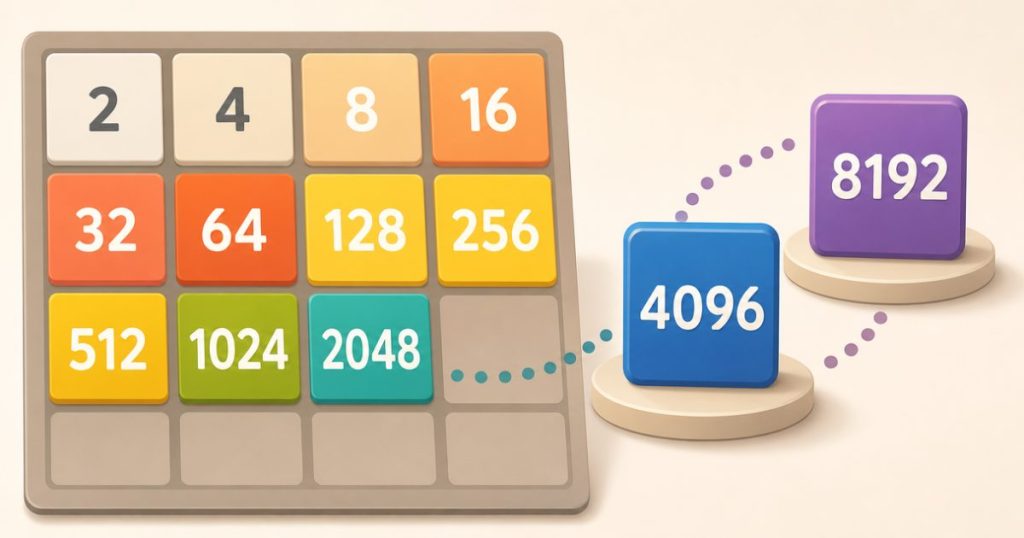
In game 2048, tile values always follow one rule: two identical tiles merge into one tile with double the value. A 2 becomes 4, a 4 becomes 8, and the pattern keeps going through 16, 32, 64, all the way to 2048 and beyond. That doubling sequence is the core of the game.
Those numbers are more than milestones to chase. They also show how you create space on the board, how your score grows, and how close you are to losing control of the run. Once you understand the value ladder, it becomes easier to spot useful merges, protect your largest tile, and judge whether a board is still in good shape.
How tile values work in 2048
The rule is simple: a tile can only merge with another tile of the same value. A 2 cannot merge with a 4, and a 4 cannot merge with an 8. Only matching tiles combine, and when they do, they create one tile with the next value in the sequence.
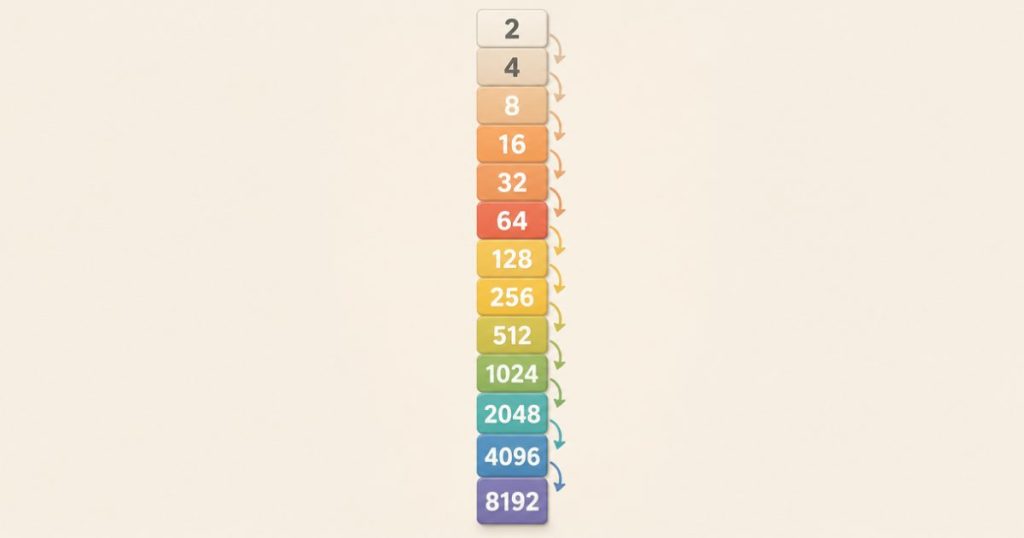
That is why 2048 uses a power-of-two progression. Each merge moves you up one step:
- 2 + 2 = 4
- 4 + 4 = 8
- 8 + 8 = 16
- 16 + 16 = 32
- 32 + 32 = 64
- 64 + 64 = 128
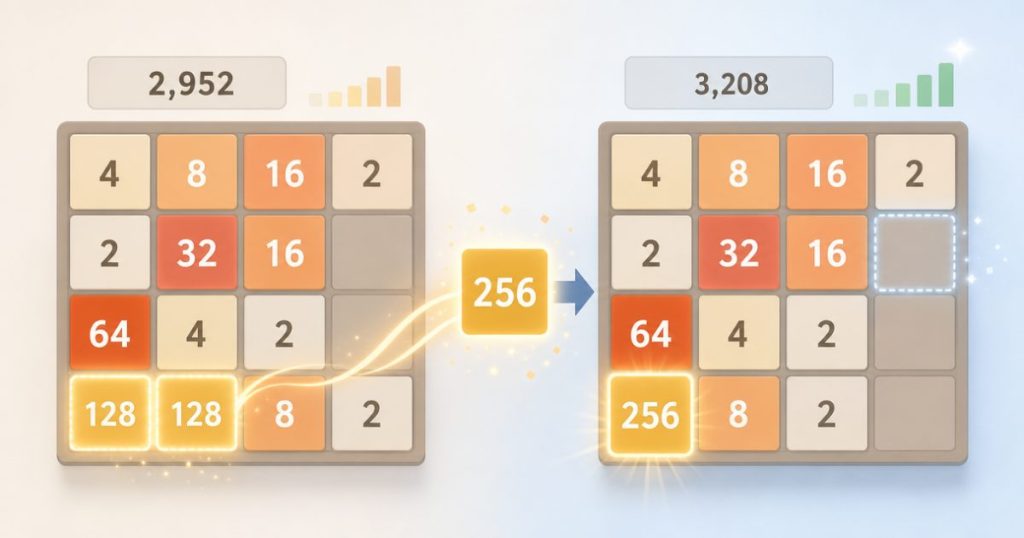
- 128 + 128 = 256
- 256 + 256 = 512
- 512 + 512 = 1024
- 1024 + 1024 = 2048
- 2048 + 2048 = 4096
- 4096 + 4096 = 8192
The ladder can keep going if you keep the board under control. Higher tiles are rarer because each step depends on making the right merges in the right order without breaking your structure.
What the value ladder means in real play
The value ladder gives you practical goals you can recognize quickly. If two 64 tiles sit near each other, you know they can become 128. If you are working toward 1024, every smaller merge is part of that larger plan.
It also explains why board organization matters so much. A board can still contain several possible merges, but if the values are scattered, it becomes harder to build them into larger tiles later. The sequence works best when matching values stay close enough to combine cleanly.
What it means to reach 2048, 4096, or 8192
When players say they reached 2048, they usually mean they created the 2048 tile, not that the game ended there. In many versions, that is the main milestone tile, but it is not the highest possible value. If the board still has room and the tiles stay organized, the run can continue to 4096, 8192, and sometimes much higher.
Each milestone is harder than the one before it. A 2048 tile already requires many successful merges, and 4096 or 8192 usually demand a board that has stayed structured for a long time. That is why players often treat 2048 as a turning point, not the finish line.
Why each merge matters for score and board space
Every merge does two things at once. First, it adds to your score. Bigger merges usually give more points than smaller ones because the tile being created has a higher value. Second, it frees up one cell on the board, which gives you more room for future moves.
That second part is easy to overlook, but it is one of the biggest reasons good 2048 play works. A merge is not just a number upgrade. It is also a space-management move. Clearing a tile reduces crowding and gives you more chances to set up the next merge.
For example, combining two 128 tiles into a 256 tile helps more than the score counter. It also removes one tile from the board and can open a lane for lower tiles to shift into better positions. That is why smart merges often matter even when they do not look dramatic.
How higher tiles affect strategy
The higher the tile, the more carefully you need to protect it. One awkward move can break the order of your board and make it hard to bring matching tiles together again. That is why experienced players usually keep their largest tile in one corner and build around it instead of letting it drift across the board.
This is also where board control starts to matter more than raw luck. Reaching 4096 or 8192 is usually not about one lucky spawn. It is about repeated good decisions: preserving empty space, keeping the largest tile anchored, and avoiding moves that scramble the layout.
If you want a deeper look at board safety and move selection, higher-score board habits matter just as much as the tile ladder itself.
Why players keep the biggest tile in one corner
Corner play works because it gives the board a stable anchor. If your largest tile stays in one corner, the surrounding tiles can be arranged in descending order, which makes matching easier and reduces the chance of trapping the big tile in the middle.
Without that structure, a large tile can get isolated. You may still have space on the board, but the path back to a clean merge chain can be much harder. Many failed runs do not end because the player ran out of numbers. They end because the tile order broke.
Is 2048 the highest tile you can reach?
No. 2048 is a milestone tile, not the final possible tile. In many games, including browser versions with continued play, you can keep merging after 2048 and aim for larger targets like 4096, 8192, 16384, and beyond.
That said, each higher tile becomes much less common in normal play because the game asks you to maintain a clean structure for longer. The challenge grows quickly. A board that is only slightly messy at 512 or 1024 may still survive, but the same kind of mess can become fatal when you are trying to build 4096 or 8192.
Does a bigger tile always mean a better score?
A bigger tile usually means you are making progress, but it does not automatically mean you are playing well. You can create a high tile while leaving the board unstable. If that happens, your run may end soon after, even if the score looks impressive at first glance.
The best runs combine both sides of the game: large tiles and a healthy board. A steady 512 or 1024 with room to move can be more useful than a single awkward high tile stuck in the wrong place. In 2048, a good score comes from keeping the chain alive, not just from reaching one number.
How to think about tile values as a goal system
It helps to treat the value ladder as a set of checkpoints. Early on, your goal is to build small merges cleanly. In the midgame, you want to keep the board ordered so those small merges can feed into 256, 512, and 1024. Late in the run, the target is to preserve that structure long enough to reach 2048 and maybe continue beyond it.
A useful rule is this: if a merge helps both your score and your board shape, it is probably a good merge. If it creates a larger tile but ruins the order of your board, it may slow you down later. The tile number matters, but the layout around it matters just as much.
For more on the habits that support that kind of play, see beginner 2048 rules that keep your board under control.
A simple way to remember the pattern
Think of 2048 as a doubling game, not a counting game. You are not building by ones, twos, or tens. You are climbing a ladder of powers of two, one successful merge at a time. That is why the numbers stay predictable once you know the pattern.
The practical takeaway is simple: the sequence from 2 to 2048 and beyond only helps if you can keep matching tiles close together. The numbers tell you what is possible, but your board management decides how far you can go.
Frequently Asked Questions
Why do tiles in 2048 always double?
Because each merge combines two identical tiles into one tile with twice the value. That is the core rule behind the game’s power-of-two progression.
What comes after 2048 in 2048?
The next common value is 4096, followed by 8192, 16384, and higher if the game mode allows continued play and the board stays manageable.
Is 2048 the highest tile you can reach?
No. 2048 is a milestone tile, not the highest possible tile. Many players continue well beyond it.
Does a bigger tile always mean a better score?
Not by itself. Bigger tiles usually increase score, but the board still needs to stay organized or the run can end quickly.
If you remember one thing, make it this: 2048 is not the end of the math. It is just one step in a doubling sequence that can keep going if your board stays organized.
Higher tiles like 4096 and 8192 depend less on luck than on structure. Keep matching tiles in order, protect your largest tile, and leave yourself room to move. That is what turns tile values into a real path toward bigger runs.