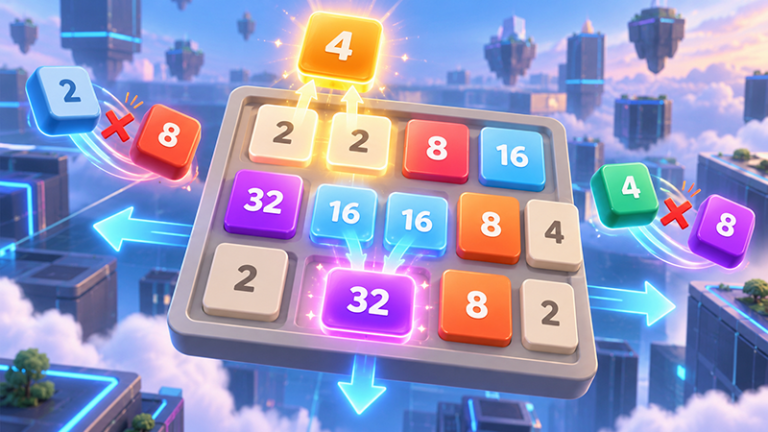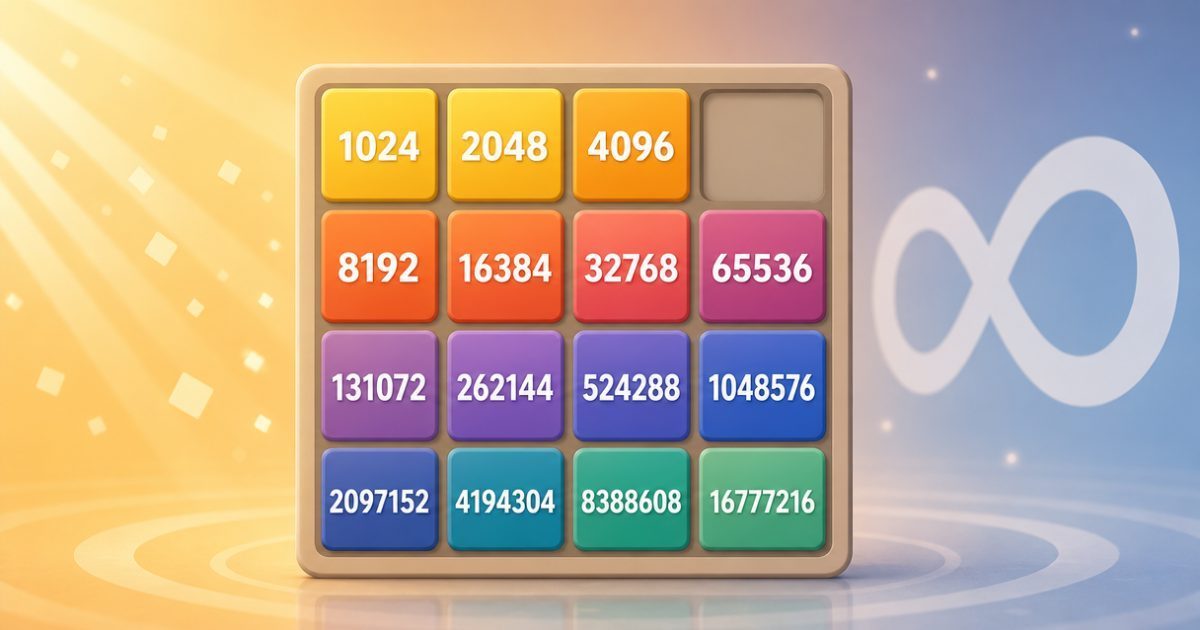
A 2048 game can last a very long time, but on the classic 4×4 board it is not truly endless in any practical sense. There is no move limit, and reaching the 2048 tile does not end the run. Even so, the board is finite, new tiles appear at random, and every real game eventually reaches a position with no legal moves left.
The short answer is: 2048 can keep going for a long time, but not forever on a fixed board. The difference comes down to board size, open space, and whether the next spawn helps you or traps you.
What actually ends a 2048 game
2048 ends when the board is full and you cannot make a legal move in any direction. That means there are no empty cells and no adjacent tiles that can merge. If even one merge is still available, the game continues.
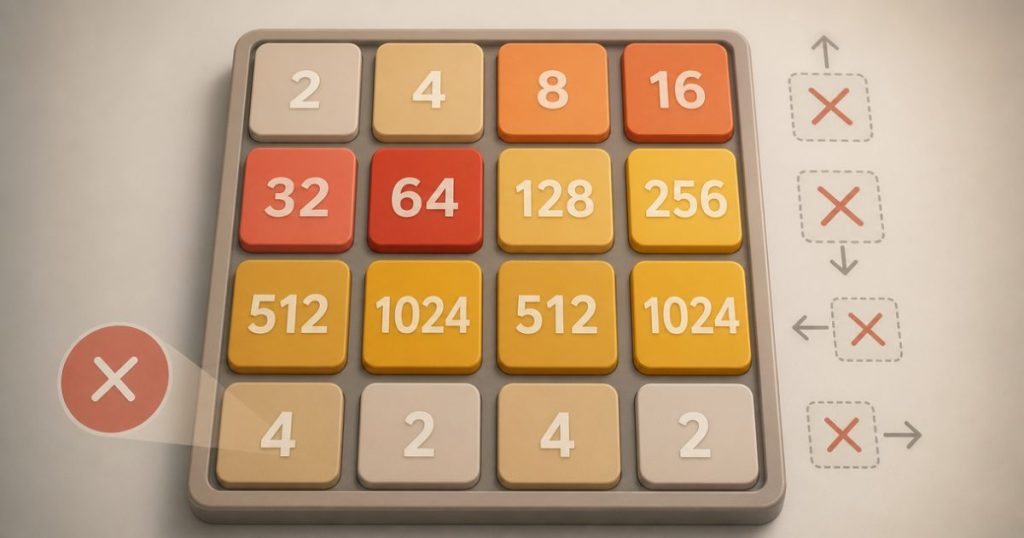
This is why a board can look nearly finished without being over. You might have only one or two empty cells left, but if those spaces still allow a merge chain, the run is alive. Once every row and column is locked into incompatible values, the game over condition appears immediately.
You can keep playing after making the 2048 tile
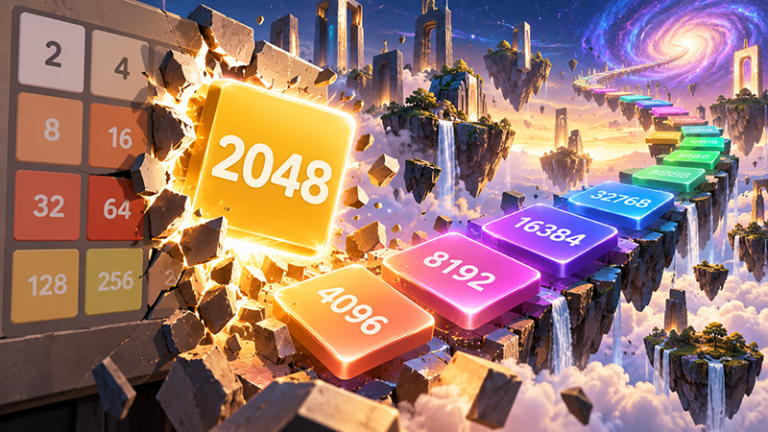
In standard 2048 play, 2048 is not a stop sign. It is the tile that gives the game its name. If the version you are playing allows continued play, you can keep merging upward to 4096, 8192, 16384, and beyond. Your score also keeps rising as long as merges keep happening.
If you want a clearer explanation of how tile values build upward, including what comes after 2048, see 2048 tile values explained. The key point here is simple: the 2048 tile is a milestone, not the endpoint.
Why a fixed board has a real mathematical limit
The classic board has only 16 cells, so it can only hold a limited number of arrangements at any given moment. The number of possible board states is still huge, but it is finite. That matters because 2048 is not an open-ended field where tiles can spread forever. It is a closed system with hard boundaries.
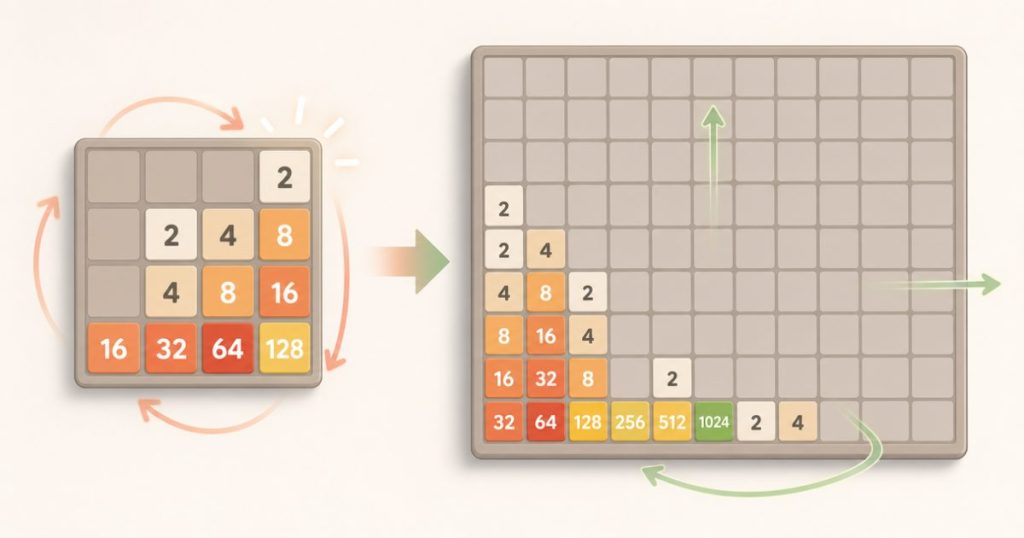
As the game continues, the board moves through different configurations, but every turn still has to fit inside the same 4×4 grid. Random tile spawns also narrow your options over time. You cannot control every new tile, so even a strong player can eventually be pushed into a dead end.
A fixed 2048 board can produce long, surprising runs, but it cannot escape the limits of a finite grid and random tile placement.
Why some games last much longer than others
Game length depends on three main things: skill, luck, and board size. Skilled players keep empty spaces available, protect their merge structure, and avoid moves that scramble the board. Luck matters because one bad spawn in the wrong place can collapse a good position fast.
Board size changes the question even more. On a larger grid, you have more room to absorb awkward spawns and recover from mistakes. That does not make the game infinite, but it does make very long runs more realistic. A larger board simply delays the moment when the board becomes crowded enough to fail.
Skill helps preserve empty space
The biggest reason good players survive longer is space management. Empty cells act like breathing room. They give you flexibility, let tiles move without immediate pressure, and buy time for the next useful merge. Once the board gets cramped, the odds of a dead end rise quickly.
That is why experienced players focus on keeping the board organized. The goal is not just making merges. It is keeping a structure that can absorb new tiles without breaking apart.
Random spawns still decide a lot
2048 is partly a logic game and partly a stochastic one. You choose the direction of each move, but you do not choose where the next tile appears. A harmless-looking 2 or 4 in the wrong square can block a merge lane, break your tile order, or force you into a move that makes the board less flexible.
That randomness is why no strategy can guarantee endless survival on a fixed board. You can improve your odds a lot, but you cannot control every future position.
How larger boards change the question
Larger board sizes do not remove the limit. They just push it farther away. On a 5×5, 6×6, 8×8, or 10×10 board, there are more cells, more available paths, and more room to recover from poor tile placement. That means longer games and a better chance to build higher-value tiles before the board locks up.
If you want a practical example of how a much larger board changes tile management, the strategy principles in 2048 10×10 strategy show why space control becomes even more important as the grid grows. A bigger board gives you time, but it also demands discipline so you do not waste that space.
Is there a maximum tile or score limit in standard play?
There is no normal in-game score cap that ends a standard 2048 session at a specific number. The practical limit is the board itself. As long as legal moves remain, play continues. Once the board is blocked, the game ends regardless of your score.
In theory, very high tiles and very high scores are possible because merges can keep stacking. In practice, the board usually fails long before any absolute ceiling becomes relevant. So the meaningful limit is not the score counter. It is whether the next move still leaves room for the game to continue.
What this means for players who want long runs
If your goal is a longer 2048 game, the main task is not chasing the idea of forever. It is learning how to delay collapse. Keep empty cells available, avoid scrambling your largest tiles, and treat every move as part of a board-wide structure rather than a single merge.
On a classic 4×4 board, expect strong runs, not true infinity. On larger boards, expect more room and more time, but not an endless session. The game can stretch surprisingly far, but every fixed board still has a breaking point.
Frequently Asked Questions
Does 2048 end when you reach the 2048 tile?
No. In most versions, 2048 is just the first major milestone. You can usually keep playing for higher tiles and a higher score until the board runs out of legal moves.
What is the real game over condition in 2048?
The game ends when the board is full and no adjacent tiles can merge in any direction.
Can a larger 2048 board go on forever?
No. A larger board can last much longer because it has more space, but it is still finite and can still reach a blocked position.
Is 2048 limited by score or by moves?
Standard 2048 is limited by available moves, not by a fixed score cap or turn limit.
The clearest answer is this: 2048 can keep going for a long time, but on the classic 4×4 board it is not meaningfully infinite. You can play past 2048, build much higher tiles, and extend a run with good strategy. But the board is finite, the spawns are random, and eventually a position appears with no legal moves left.
If you want longer games, focus on space control and board order rather than the idea of endless play. Larger boards give you more breathing room, but they still follow the same rule: once the board locks up, the game is over.