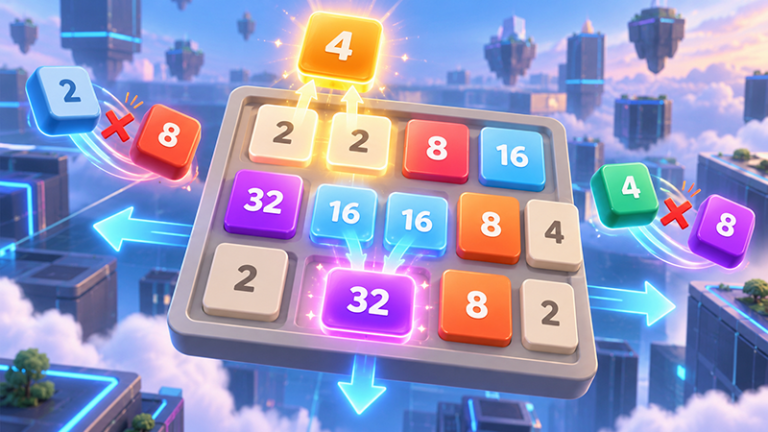
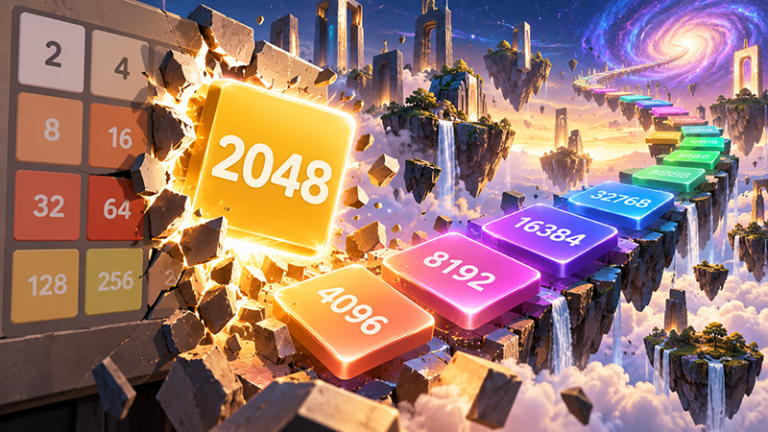
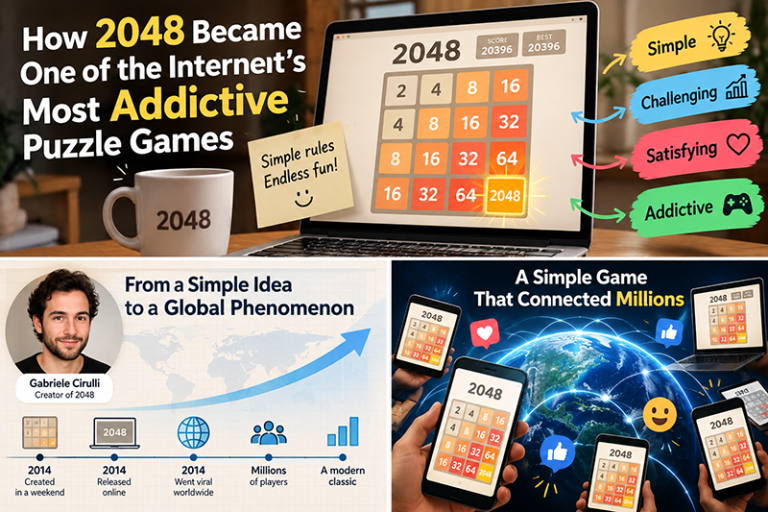
2048 is hard to put down because every move gives you an immediate result. You slide tiles, something merges, the score changes, and the board looks different at once. That fast feedback creates a simple loop: move, merge, reward, repeat. The game feels easy to start, but each run ends with the sense that you can do better next time.
That mix is what keeps players coming back. Small wins happen often, progress stays visible, and a bad run usually feels close to a better one. You are not just watching numbers rise. You are trying to protect a clean board, grow a bigger tile, and make one more move that keeps the run alive.
The simple game loop that keeps pulling you back
At the center of game 2048 is a very short feedback loop. You choose a direction, tiles slide, matching numbers combine, and the board immediately shows the result. That matters because you do not have to wait long to know whether a decision helped.
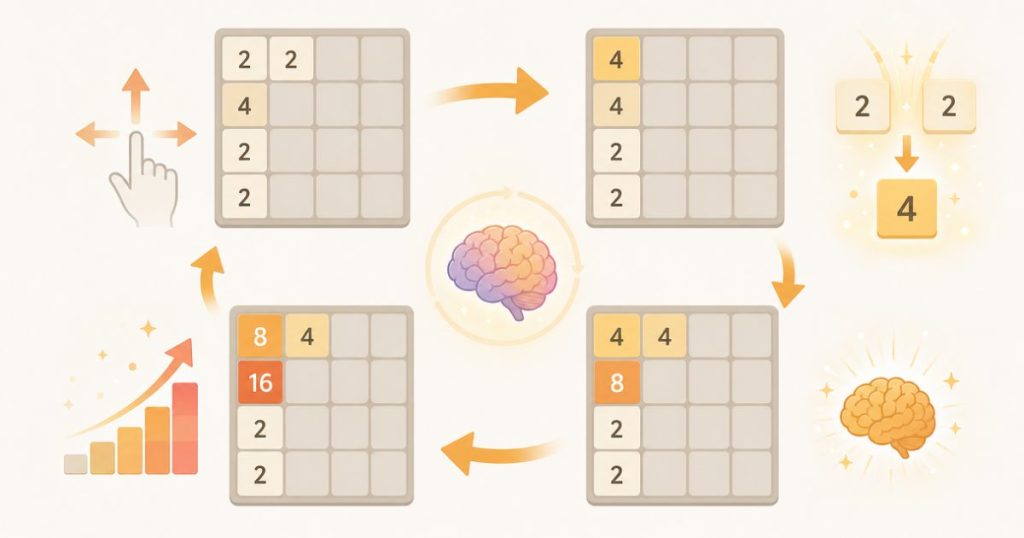
Each merge gives a small burst of satisfaction. A 2 becomes a 4. A 4 becomes an 8. Later, a 64 becomes a 128, and the feeling grows because the tile progression is visible right on the board. The reward is not abstract. It is sitting there in front of you, and the score climbs with it.
This is also why 2048 works so well as a repeatable puzzle. The rules are simple, so there is very little friction before the first move. You do not need to memorize a long system or learn a complicated control scheme. You just start. That low barrier makes it easy to restart after a loss, which strengthens the loop even more.
Every move also feels meaningful. Even a small decision can open space, set up a merge, or prepare the next two turns. The board keeps creating short-term goals, and those goals are always visible.
Why the game feels easy at first, then suddenly tight
Early in a run, 2048 gives you room to breathe. There are open cells, merges happen often, and almost any move can feel productive. That early phase builds confidence because progress comes quickly.
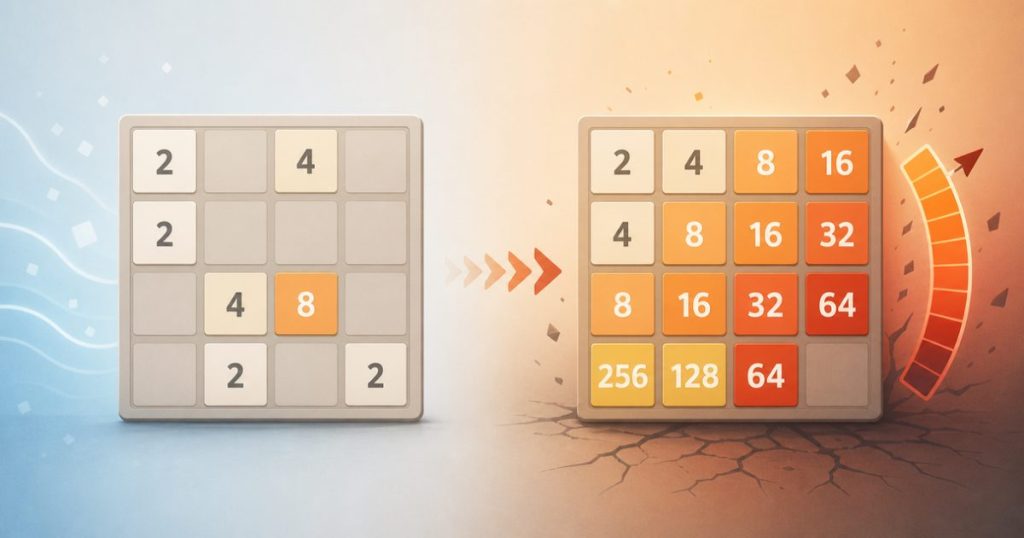
Then the difficulty curve changes. Empty spaces shrink. Tiles start stacking in awkward places. Every move affects several future turns, and careless choices matter much more. That shift is a big part of the appeal. The game lets you feel in control before it starts demanding real discipline.
This gradual pressure creates a strong contrast. A clean early board feels safe. A crowded board feels dangerous. Moving between those two states gives the game its tension. You want to preserve the open spaces you worked for, but each new tile pushes that goal a little farther away.
Recoverable mistakes matter too. Early errors often do not end the run immediately. You can still fix the board, save your largest tile, or open a new lane for merging. That keeps hope alive. If the game ended the moment you made a small mistake, many players would stop quickly. Instead, 2048 gives you just enough room to believe the next few moves might still work.
Near-misses, progress markers, and the urge for one more try
One of the strongest reasons people keep replaying 2048 is the near-miss effect. You almost get the merge you wanted. You almost keep the corner protected. You almost reach the next tile before the board closes in. That “almost” is powerful because it feels close enough to try again immediately.
The game makes that feeling even stronger with visible progress markers. Bigger tiles are not hidden achievements. They sit on the board where you can see them, and the score climbs every time you make a useful merge. Even after a loss, you can look at the final board and see evidence that you improved during the run.
That matters psychologically. A player does not just feel defeated. They often feel one or two decisions away from doing better. Maybe the run ended because a large tile drifted out of position, or because one bad swipe filled the wrong row. That kind of loss is frustrating, but it is also motivating, because the fix seems clear.
Near-misses keep 2048 engaging because they turn failure into a challenge you think you can solve on the next attempt.
Mobile play makes this effect even stronger. A round is short enough to fit into a quick break, and restarting takes very little effort. That makes “just one more game” feel reasonable, even when you have already played several rounds.
How skill and luck work together
2048 stays interesting because it gives you both control and uncertainty. Your choices matter a lot. Good board management, stable tile order, and careful use of space can carry a run far beyond random play. At the same time, the game still has enough randomness to keep every board feeling different.
The random tile spawns are important. They can help, but they can also complicate a good setup. A helpful spawn can make a run feel smooth and generous. A bad one can block a lane or force a merge you did not want yet. That variation keeps the game from feeling solved.
What makes this balance work is that randomness usually changes the situation, not the rules. You still control the direction of the board, the order of the tiles, and the shape of the available space. That means the game feels fair enough to reward planning, while still unpredictable enough to keep the tension alive.
This mix is also why 2048 has such strong replayability. If the game were only luck, players would feel powerless. If it were only skill, the pattern would get stale once mastered. 2048 sits in the middle. You can improve, but you can never remove the uncertainty completely.
If you want to see how that control works in practice, a strong board structure helps a lot. For example, keeping your highest tile anchored in one corner makes the rest of the board easier to manage. If you want a deeper look at that approach, this corner strategy guide is a useful follow-up.
Why 2048 rewards patience more than speed
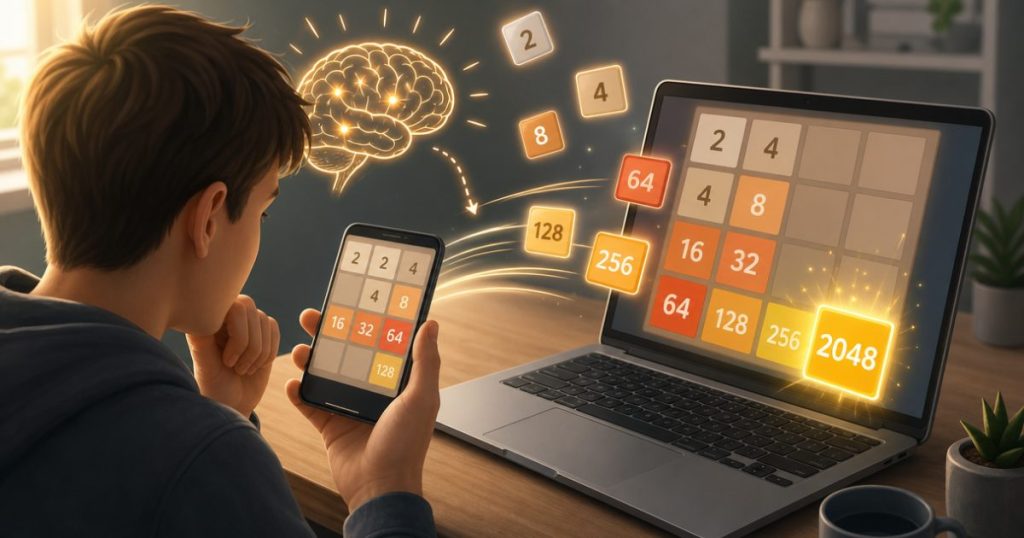
Even though the game feels fast, 2048 is not really about quick reactions. It rewards patience, pattern recognition, and long-term planning far more than speed. Good players look several moves ahead. They think about where a tile will land, which row will stay stable, and how to avoid trapping the largest number.
That creates a satisfying kind of challenge. You are not racing against a timer. You are managing pressure. The board gets tighter, but you still have time to think. That makes every move feel deliberate, and deliberate moves are often more rewarding than rushed ones.
It also explains why the game can feel so absorbing even when you are losing. You can still notice a smarter choice in a failed run. You can still feel the shape of a better strategy forming in your head. That sense of improvement encourages another attempt.
In other words, 2048 is addictive not because it tricks you, but because it keeps offering meaningful decisions in a very small space. The rules are simple. The outcomes are visible. The feedback is immediate. And the game always leaves room for the thought that a better run is possible.
Can you enjoy 2048 without overplaying it?
Yes. The same qualities that make 2048 engaging can also make it easy to repeat too often, so it helps to set a simple stopping point. A natural limit might be a target score, a single focused session, or one attempt at a specific board size before taking a break. Having a clear end point keeps the game fun instead of turning it into an endless loop.
If you enjoy the puzzle most when you are thinking carefully, treat each round like practice rather than a chase for one perfect run. That keeps the experience satisfying even when the board collapses. And if you want to improve rather than just replay, habits like stable tile order and corner control will give each session more purpose.
For many players, that balance is what makes 2048 special. It is quick, readable, and always ready for another round, but it also gives you something real to learn each time you play.
Frequently Asked Questions
Why does 2048 feel so hard to stop playing?
Because every move gives instant feedback, small wins arrive often, and near-misses make you want another attempt right away.
Is 2048 addictive because of luck or skill?
It is a mix of both. Skill matters more over time, but randomness keeps each board from feeling identical.
What part of 2048 makes players say ‘one more game’?
Usually it is a close loss, a nearly completed tile chain, or the feeling that one smarter run could go much further.
2048 feels addictive because it combines immediate rewards, visible progress, and just enough uncertainty to make every run feel winnable. The game loop is short, the goals are clear, and even a close loss can feel like a lesson instead of a dead end.
If you want to enjoy it without getting stuck in endless retries, set a natural stopping point and treat each round as a chance to improve one part of your board management. That way, the game stays engaging for the right reason: it keeps giving you a puzzle worth solving.