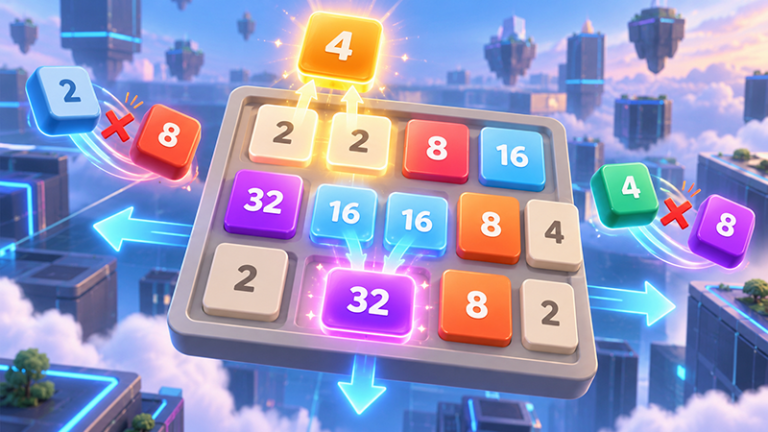
The short answer is: pick one corner early and keep your highest tile there. In most 2048 games, consistency matters more than which corner you choose. A fixed corner gives you a stable anchor, makes the board easier to read, and helps your merges stay predictable as space runs out.
This works because 2048 rewards structure. If your biggest tile keeps drifting around the board, smaller tiles lose their order and you run out of safe moves faster. A corner setup reduces that risk and gives you a simple way to build larger merge chains over time.
Which corner should you use in 2048?
Any corner can work: top-left, top-right, bottom-left, or bottom-right. There is no universal best choice. The better corner is the one that fits your usual swipe direction or arrow-key comfort, because that makes it easier to stay consistent.

What matters most is the rule you follow after choosing it. Once you anchor your highest tile in that corner, try to keep the row and column next to it as ordered as possible. That usually means building a predictable edge pattern instead of moving tiles all over the grid.
For example, if you choose the bottom-left corner, you would try to keep your largest tile there while stacking the next tiles along the bottom row and left column in a controlled way. If you switch corners often, the board loses that structure and the biggest tile becomes harder to protect.
Why consistency beats chasing the “perfect” corner
Many beginners spend too much time trying to find the ideal corner after every move. That usually makes the board worse. In 2048, the exact corner matters less than sticking with one plan long enough for the board to organize itself around it.
A consistent corner strategy also lowers the number of risky moves you need to make. Instead of reacting to every new tile by changing direction, you keep the same board shape in mind and let merges happen along a stable edge. That becomes especially useful once your tiles reach 128, 256, or higher, when one bad shuffle can break the whole run.
Think of the corner as a home base. The goal is not to move the biggest tile around safely. The goal is to keep the biggest tile still while everything else works around it.
The movement pattern that keeps a corner setup intact
A good corner strategy usually depends on using only two preferred directions most of the time. Those directions should support your chosen corner and keep the highest tile from being pushed out of place.

For example, if you anchor the bottom-right corner, you might rely mainly on right and down moves when they fit the board shape you are building. If your chosen corner is top-left, your comfortable pair may be up and left. The exact pair matters less than the rule itself: use movements that reinforce the corner, not movements that fight it.
This is why corner play often feels repetitive. That repetition is not a weakness. It is what keeps the row or column beside your anchor organized, which makes future merges easier to plan.
How the structure helps merges
When tiles stay ordered, matching numbers are more likely to line up without extra cleanup moves. That creates cleaner merge chains and leaves more open spaces available. In practical terms, a well-managed corner helps you avoid the scattered board pattern that traps many games long before 2048.
If you want a fuller look at how a stable setup leads to the target tile, this guide also helps: how to get the 2048 tile with a simple strategy.
A simple board example of corner control
Imagine your highest tile is already in the lower-left corner. The tiles beside it are arranged in a tidy sequence, and there are a few open cells in the middle of the board. If you keep making moves that support that corner, the next merges happen near the edge, where they are easy to manage.
Now compare that with a player who keeps swiping in all four directions. The highest tile may get pulled away from the corner, smaller tiles spread across the board, and the row order breaks apart. The same board can go from manageable to awkward in just a few moves, even if no merge is immediately lost.
That is the real value of corner strategy: it helps prevent tile scattering before it starts.
When corner strategy starts to matter most
Corner play becomes more useful as the board fills up and the tile values rise. Early in the game, you can recover from messy moves more easily because there is plenty of open space. Later on, the board gets tighter and every bad move creates more pressure.
At that stage, the corner does two jobs. It protects your highest tile and gives you a reference point for the rest of the board. If the anchor stays put, you have a better chance of spotting safe merges and avoiding moves that would break your structure.
This is also why corner strategy pairs well with endgame planning. If you want to see how that pressure changes when space gets low, the article on what to do when the board is almost full is a useful next read.
Common mistakes that break corner control
- Switching corners too often. If you keep changing your anchor, the board never settles into a usable pattern.
- Dragging the highest tile out of place. One careless swipe can move your main tile away from the edge and force a reset.
- Using all four directions without a plan. Random movement usually destroys the row or column order that corner play depends on.
- Filling the edge with mismatched tiles. If the edge next to your anchor becomes cluttered, future merges get harder.
- Ignoring empty spaces. Corner strategy still needs breathing room. If you leave no room for new spawns, the board can lock up quickly.
These mistakes are common because corner strategy can feel restrictive at first. But the restriction is what makes it useful. A controlled board is much easier to manage than a flexible board that has already lost its shape.
When to break the corner rule
Corner strategy is strong, but it is not absolute. Sometimes you need to make a temporary exception to avoid blocking a critical merge or to stop the board from collapsing. If a small, safe move preserves space or prevents a dead end, take it.
The key is to treat those exceptions as repairs, not as a new habit. After the move, return to your chosen corner and rebuild the structure as soon as you can. If you keep breaking the pattern, the strategy stops working.
So the rule is simple: bend the corner plan when the board demands it, but do not abandon it unless the position is already unrecoverable.
A practical rule for choosing your corner

If you are learning 2048, pick the corner that feels most natural with your swipes or arrow keys and stick with it for several games. The goal is not to discover the one perfect corner. The goal is to make one corner feel automatic so you can focus on board control, merge timing, and space management.
Once that corner becomes second nature, your games should look cleaner: fewer scattered tiles, more predictable merges, and a better chance of keeping your highest tile alive long enough to build a higher score.
Frequently Asked Questions
Is one corner better than the others in 2048?
Not really. The best corner is usually the one you can keep consistent with your preferred movement pattern.
Why do players keep the highest tile in a corner?
A corner anchor makes the board easier to control and reduces the chance that your largest tile gets pulled into awkward positions.
What moves should I avoid with a corner strategy?
Avoid random directional changes that scatter the board or move your highest tile away from its anchor.
Can corner strategy guarantee a win?
No. It lowers risk and improves control, but random spawns and bad board states can still end a run.
If you want a simple rule that works in most games, choose one corner, keep your highest tile there, and let the rest of the board organize around it. The exact corner matters less than the discipline to stay consistent.
When the board starts getting crowded, that consistency matters even more. A stable corner gives you better control, safer merges, and a clearer path toward higher tiles and better scores.